
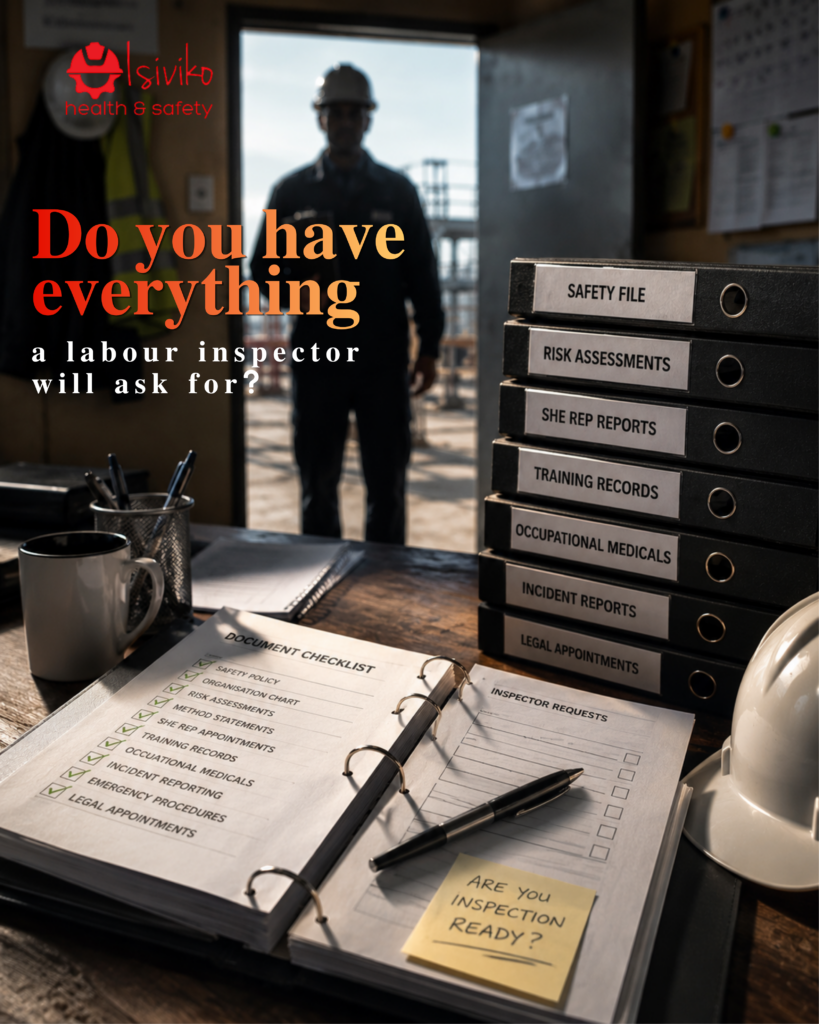
A labour inspection is not something most businesses plan for. Yet every employer in South Africa has a legal responsibility to comply with the Occupational Health and Safety Act (OHSA 85 of 1993) and applicable regulations.
When a labour inspector arrives, the focus is not only on what is happening in the workplace. The real focus is on the evidence behind your health and safety management system.
Can you prove that risks have been identified?
Can you prove employees have been trained?
Can you prove your legal responsibilities are being fulfilled?
Most businesses are unprepared for the questions that follow.
𝐖𝐡𝐚𝐭 𝐈𝐬 𝐚 𝐋𝐚𝐛𝐨𝐮𝐫 𝐈𝐧𝐬𝐩𝐞𝐜𝐭𝐢𝐨𝐧?
A labour inspection is conducted to assess whether an employer is complying with health and safety legal requirements in South Africa.
Inspectors evaluate workplace conditions, documentation, management systems, training records, risk assessments, and legal appointments. Their role is to identify non-compliance and ensure employers are protecting employees and managing workplace risks effectively.
An inspection can take place in construction, manufacturing, logistics, agriculture, warehousing, engineering, retail, and office environments.
𝐖𝐡𝐚𝐭 𝐃𝐨𝐜𝐮𝐦𝐞𝐧𝐭𝐬 𝐖𝐢𝐥𝐥 𝐚 𝐋𝐚𝐛𝐨𝐮𝐫 𝐈𝐧𝐬𝐩𝐞𝐜𝐭𝐨𝐫 𝐀𝐬𝐤 𝐅𝐨𝐫?
While requirements differ between industries, there are several documents inspectors commonly request during a labour inspection.
𝐇𝐞𝐚𝐥𝐭𝐡 𝐚𝐧𝐝 𝐒𝐚𝐟𝐞𝐭𝐲 𝐌𝐚𝐧𝐚𝐠𝐞𝐦𝐞𝐧𝐭 𝐒𝐲𝐬𝐭𝐞𝐦
One of the first things inspectors look for is evidence that health and safety is being managed systematically.
A Health and Safety Management System should clearly define:
Health and safety responsibilities
Company procedures
Risk management processes
Emergency preparedness
Legal compliance requirements
A management system demonstrates that health and safety is actively managed rather than treated as a paperwork exercise.
𝐑𝐢𝐬𝐤 𝐀𝐬𝐬𝐞𝐬𝐬𝐦𝐞𝐧𝐭𝐬
Risk assessments remain one of the most important compliance documents.
Inspectors want evidence that hazards have been identified, risks have been evaluated, and control measures have been implemented.
Without current risk assessments, it becomes difficult to demonstrate that workplace risks are being managed effectively.
𝐋𝐞𝐠𝐚𝐥 𝐀𝐩𝐩𝐨𝐢𝐧𝐭𝐦𝐞𝐧𝐭𝐬
Labour inspectors frequently request proof that competent individuals have been formally appointed to fulfil health and safety responsibilities.
Examples include:
Health and Safety Representatives
Supervisors
Incident Investigators
First Aiders
Fire Fighting Teams
These appointments should be documented, current, and readily available.
𝐇𝐞𝐚𝐥𝐭𝐡 𝐚𝐧𝐝 𝐒𝐚𝐟𝐞𝐭𝐲 𝐓𝐫𝐚𝐢𝐧𝐢𝐧𝐠 𝐑𝐞𝐜𝐨𝐫𝐝𝐬
Training records provide evidence that employees understand the hazards associated with their work and know how to perform their duties safely.
Inspectors may request:
Induction records
Training registers
Certificates
Competency assessments
Proper training contributes to improved compliance and reduced workplace risk.
𝐀𝐜𝐜𝐢𝐝𝐞𝐧𝐭 𝐚𝐧𝐝 𝐈𝐧𝐜𝐢𝐝𝐞𝐧𝐭 𝐈𝐧𝐯𝐞𝐬𝐭𝐢𝐠𝐚𝐭𝐢𝐨𝐧 𝐑𝐞𝐜𝐨𝐫𝐝𝐬
If an incident has occurred, inspectors will want to see how it was investigated and what corrective actions were implemented.
The purpose of an investigation is not to assign blame. It is to identify root causes and prevent similar incidents from occurring again.
Typical documents include:
Incident reports
Investigation findings
Corrective action records
Follow-up inspections
𝐎𝐜𝐜𝐮𝐩𝐚𝐭𝐢𝐨𝐧𝐚𝐥 𝐌𝐞𝐝𝐢𝐜𝐚𝐥 𝐑𝐞𝐜𝐨𝐫𝐝𝐬
Depending on workplace risks, employers may be required to implement medical surveillance and ensure workers are medically fit for their duties.
Inspectors may request evidence of:
Occupational medical assessments
Fitness-for-work certificates
Medical surveillance programmes
These records form an important part of legal compliance.
𝐒𝐚𝐟𝐞𝐭𝐲 𝐅𝐢𝐥𝐞𝐬
For construction and higher-risk industries, safety files often receive significant attention during inspections.
A safety file may include:
Risk assessments
Legal appointments
Method statements
Emergency procedures
Contractor information
Inspection registers
Training records
An incomplete safety file often raises immediate concerns during an inspection.
𝐓𝐡𝐞 𝐐𝐮𝐞𝐬𝐭𝐢𝐨𝐧𝐬 𝐓𝐡𝐚𝐭 𝐂𝐚𝐭𝐜𝐡 𝐁𝐮𝐬𝐢𝐧𝐞𝐬𝐬𝐞𝐬 𝐎𝐟𝐟 𝐆𝐮𝐚𝐫𝐝
Documentation is only the beginning.
Inspectors often ask questions such as:
Who is responsible for health and safety?
When was your last risk assessment completed?
How do you monitor compliance?
How are contractors managed?
What actions were taken after the last incident?
How do you ensure employees remain competent?
These questions quickly reveal whether health and safety is actively managed or simply filed away.
𝐖𝐡𝐲 𝐁𝐮𝐬𝐢𝐧𝐞𝐬𝐬𝐞𝐬 𝐒𝐭𝐫𝐮𝐠𝐠𝐥𝐞 𝐃𝐮𝐫𝐢𝐧𝐠 𝐋𝐚𝐛𝐨𝐮𝐫 𝐈𝐧𝐬𝐩𝐞𝐜𝐭𝐢𝐨𝐧𝐬
Many organisations wait until an inspection is scheduled before reviewing their compliance systems.
This approach creates several challenges:
Missing documentation
Outdated records
Incomplete safety files
Expired appointments
Inadequate training records
Poor risk management processes
By the time these issues are discovered, the inspection has already started.
𝐇𝐨𝐰 𝐭𝐨 𝐁𝐞𝐜𝐨𝐦𝐞 𝐈𝐧𝐬𝐩𝐞𝐜𝐭𝐢𝐨𝐧 𝐑𝐞𝐚𝐝𝐲
Businesses that perform well during labour inspections follow a proactive approach.
Key actions include:
Review compliance documentation regularly
Update risk assessments when conditions change
Conduct internal audits
Maintain current safety files
Verify legal appointments
Keep training records organised
Investigate incidents properly
Implement corrective actions promptly
Inspection readiness should be part of normal business operations, not a last-minute project.
𝐂𝐨𝐦𝐩𝐥𝐢𝐚𝐧𝐜𝐞 𝐏𝐫𝐨𝐭𝐞𝐜𝐭𝐬 𝐌𝐨𝐫𝐞 𝐓𝐡𝐚𝐧 𝐘𝐨𝐮𝐫 𝐁𝐮𝐬𝐢𝐧𝐞𝐬𝐬
Effective health and safety management helps protect:
Employees
Operations
Productivity
Reputation
Contracts
Business continuity
A strong health and safety system is not simply about compliance. It is about reducing risk and supporting long-term business performance.
𝐅𝐫𝐞𝐪𝐮𝐞𝐧𝐭𝐥𝐲 𝐀𝐬𝐤𝐞𝐝 𝐐𝐮𝐞𝐬𝐭𝐢𝐨𝐧𝐬
𝐖𝐡𝐚𝐭 𝐝𝐨𝐞𝐬 𝐚 𝐥𝐚𝐛𝐨𝐮𝐫 𝐢𝐧𝐬𝐩𝐞𝐜𝐭𝐨𝐫 𝐜𝐡𝐞𝐜𝐤 𝐟𝐢𝐫𝐬𝐭?
Inspectors typically begin by reviewing health and safety documentation, legal appointments, risk assessments, and evidence of compliance management.
𝐂𝐚𝐧 𝐚 𝐥𝐚𝐛𝐨𝐮𝐫 𝐢𝐧𝐬𝐩𝐞𝐜𝐭𝐨𝐫 𝐬𝐡𝐮𝐭 𝐝𝐨𝐰𝐧 𝐚 𝐰𝐨𝐫𝐤𝐩𝐥𝐚𝐜𝐞?
Yes. Where serious health and safety risks are identified, inspectors have the authority to issue notices that restrict or stop work until corrective actions are implemented.
𝐇𝐨𝐰 𝐨𝐟𝐭𝐞𝐧 𝐬𝐡𝐨𝐮𝐥𝐝 𝐫𝐢𝐬𝐤 𝐚𝐬𝐬𝐞𝐬𝐬𝐦𝐞𝐧𝐭𝐬 𝐛𝐞 𝐫𝐞𝐯𝐢𝐞𝐰𝐞𝐝?
Risk assessments should be reviewed whenever workplace conditions change, after incidents, and periodically as part of ongoing compliance management.
𝐈𝐬 𝐚 𝐬𝐚𝐟𝐞𝐭𝐲 𝐟𝐢𝐥𝐞 𝐫𝐞𝐪𝐮𝐢𝐫𝐞𝐝 𝐟𝐨𝐫 𝐞𝐯𝐞𝐫𝐲 𝐛𝐮𝐬𝐢𝐧𝐞𝐬𝐬?
Not every business requires the same type of safety file. Requirements vary depending on industry, activities, and applicable regulations.
𝐖𝐡𝐚𝐭 𝐢𝐬 𝐭𝐡𝐞 𝐎𝐜𝐜𝐮𝐩𝐚𝐭𝐢𝐨𝐧𝐚𝐥 𝐇𝐞𝐚𝐥𝐭𝐡 𝐚𝐧𝐝 𝐒𝐚𝐟𝐞𝐭𝐲 𝐀𝐜𝐭?
The Occupational Health and Safety Act (OHSA 85 of 1993) is the primary legislation governing workplace health and safety in South Africa.
𝐏𝐚𝐫𝐭𝐧𝐞𝐫 𝐖𝐢𝐭𝐡 𝐈𝐒𝐈𝐕𝐈𝐊𝐎 𝐇𝐞𝐚𝐥𝐭𝐡 𝐚𝐧𝐝 𝐒𝐚𝐟𝐞𝐭𝐲
Do not wait for a labour inspector to identify gaps in your compliance system.
ISIVIKO Health and Safety assists businesses with:
Health and Safety Management Systems
Risk Assessments
Accident and Incident Investigations
Health and Safety Training
Construction Safety
Safety Files
Occupational Medicals
Our consultants help businesses remain compliant, reduce risk, and stay inspection ready.