
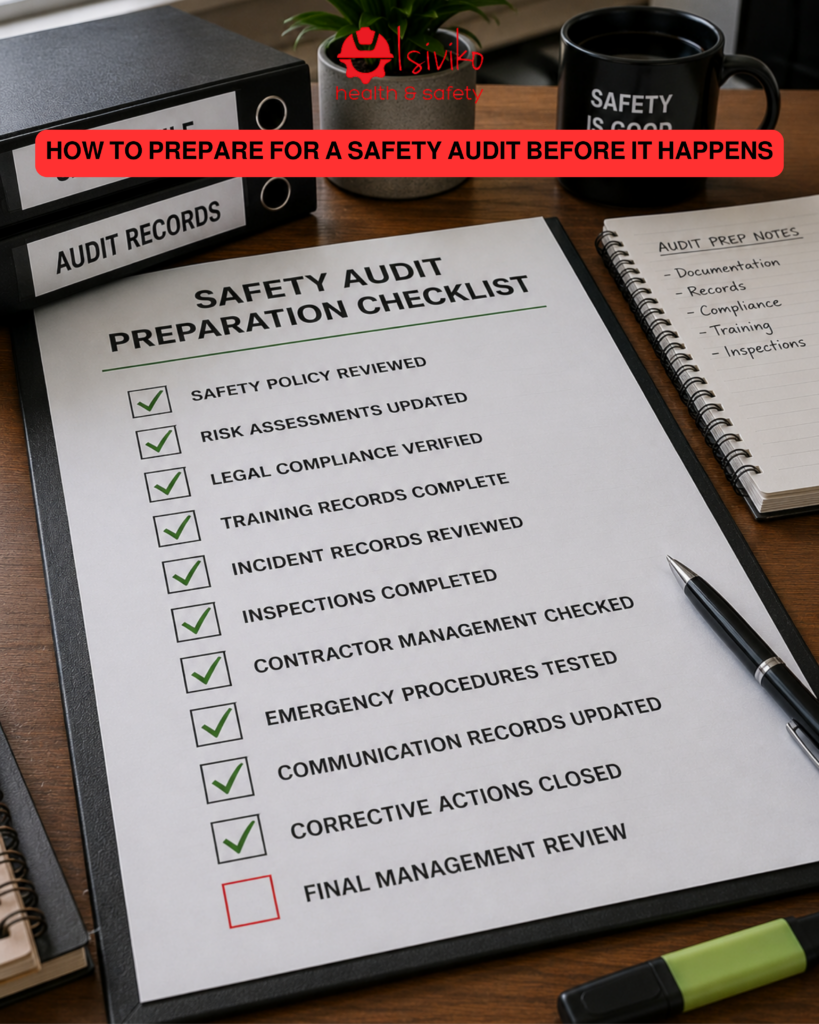
Many businesses only think about a safety audit when they receive notice that one is coming.
By then, it is often too late.
Missing documents, incomplete records, outdated risk assessments and compliance gaps tend to surface when organisations rush to prepare at the last minute.
The businesses that perform best during a workplace safety audit are not the businesses that prepare the week before.
They are the businesses that build audit readiness into their daily operations.
𝐖𝐡𝐚𝐭 𝐈𝐬 𝐚 𝐒𝐚𝐟𝐞𝐭𝐲 𝐀𝐮𝐝𝐢𝐭?
A safety audit is a structured review of an organisation’s health and safety management systems, procedures, documentation and workplace practices.
The purpose is to determine whether the business complies with applicable legislation, company standards and workplace safety requirements.
A health and safety audit helps identify weaknesses before they become incidents, regulatory findings or costly business disruptions.
𝐖𝐡𝐲 𝐒𝐚𝐟𝐞𝐭𝐲 𝐀𝐮𝐝𝐢𝐭 𝐏𝐫𝐞𝐩𝐚𝐫𝐚𝐭𝐢𝐨𝐧 𝐌𝐚𝐭𝐭𝐞𝐫𝐬
A failed audit can expose more than compliance issues.
It can reveal operational weaknesses that affect productivity, reputation and business performance.
Poor audit results may lead to:
Corrective action requirements
Failed client compliance reviews
Labour inspection findings
Increased legal exposure
Project delays
Contractual challenges
Financial losses
Preparation reduces these risks.
𝐓𝐡𝐞 𝐃𝐨𝐜𝐮𝐦𝐞𝐧𝐭𝐬 𝐄𝐯𝐞𝐫𝐲 𝐁𝐮𝐬𝐢𝐧𝐞𝐬𝐬 𝐒𝐡𝐨𝐮𝐥𝐝 𝐑𝐞𝐯𝐢𝐞𝐰
One of the most common reasons businesses struggle during a safety audit is incomplete documentation.
Before an audit takes place, review:
𝐑𝐢𝐬𝐤 𝐀𝐬𝐬𝐞𝐬𝐬𝐦𝐞𝐧𝐭𝐬
Ensure all risk assessments are current, relevant and signed where required.
𝐋𝐞𝐠𝐚𝐥 𝐀𝐩𝐩𝐨𝐢𝐧𝐭𝐦𝐞𝐧𝐭𝐬
Verify that appointments remain valid and reflect current responsibilities.
𝐓𝐫𝐚𝐢𝐧𝐢𝐧𝐠 𝐑𝐞𝐜𝐨𝐫𝐝𝐬
Maintain accurate records of inductions, competency training and refresher courses.
𝐈𝐧𝐜𝐢𝐝𝐞𝐧𝐭 𝐈𝐧𝐯𝐞𝐬𝐭𝐢𝐠𝐚𝐭𝐢𝐨𝐧 𝐑𝐞𝐜𝐨𝐫𝐝𝐬
Ensure incidents have been properly investigated and corrective actions documented.
𝐒𝐚𝐟𝐞𝐭𝐲 𝐅𝐢𝐥𝐞𝐬
Review safety files for completeness and accuracy.
𝐈𝐧𝐬𝐩𝐞𝐜𝐭𝐢𝐨𝐧 𝐑𝐞𝐠𝐢𝐬𝐭𝐞𝐫𝐬
Confirm that workplace inspections are conducted and recorded regularly.
𝐀𝐮𝐝𝐢𝐭 𝐑𝐞𝐚𝐝𝐢𝐧𝐞𝐬𝐬 𝐈𝐬 𝐀𝐛𝐨𝐮𝐭 𝐌𝐨𝐫𝐞 𝐓𝐡𝐚𝐧 𝐏𝐚𝐩𝐞𝐫𝐰𝐨𝐫𝐤
Many organisations focus entirely on documentation.
Auditors focus on implementation.
They want evidence that systems are working in practice.
Typical questions include:
Are risks actively managed?
Do employees understand procedures?
Are inspections conducted consistently?
Are corrective actions closed out?
Is management involved in compliance activities?
Strong documentation must be supported by strong workplace practices.
𝐂𝐨𝐦𝐦𝐨𝐧 𝐒𝐚𝐟𝐞𝐭𝐲 𝐀𝐮𝐝𝐢𝐭 𝐌𝐢𝐬𝐭𝐚𝐤𝐞𝐬
Many audit findings stem from the same recurring issues.
These include:
Outdated risk assessments
Missing signatures
Expired appointments
Incomplete training records
Poor document control
Unresolved corrective actions
Lack of management involvement
These issues are usually preventable when compliance is monitored continuously.
𝐇𝐨𝐰 𝐭𝐨 𝐁𝐮𝐢𝐥𝐝 𝐀𝐮𝐝𝐢𝐭 𝐑𝐞𝐚𝐝𝐢𝐧𝐞𝐬𝐬 𝐓𝐡𝐫𝐨𝐮𝐠𝐡𝐨𝐮𝐭 𝐭𝐡𝐞 𝐘𝐞𝐚𝐫
The most effective approach is to make compliance part of daily operations.
Businesses should:
Conduct regular internal reviews
Update documentation promptly
Monitor legal requirements
Train employees continuously
Review safety files monthly
Investigate incidents thoroughly
Track corrective actions
Audit readiness should become part of workplace culture.
𝐖𝐡𝐚𝐭 𝐀𝐮𝐝𝐢𝐭𝐨𝐫𝐬 𝐖𝐚𝐧𝐭 𝐭𝐨 𝐒𝐞𝐞
Whether the audit is internal, external or linked to a labour inspection, auditors are looking for evidence of effective management.
They want to see:
Leadership commitment
Active risk management
Employee involvement
Compliance with OHSA 85 of 1993
Continuous improvement
Accurate documentation
The strongest audits are usually the result of consistent effort rather than last-minute preparation.
𝐒𝐚𝐟𝐞𝐭𝐲 𝐀𝐮𝐝𝐢𝐭𝐬 𝐒𝐮𝐩𝐩𝐨𝐫𝐭 𝐁𝐞𝐭𝐭𝐞𝐫 𝐁𝐮𝐬𝐢𝐧𝐞𝐬𝐬 𝐏𝐞𝐫𝐟𝐨𝐫𝐦𝐚𝐧𝐜𝐞
A workplace compliance audit should not be viewed as an administrative burden.
Well-managed compliance systems often lead to:
Improved productivity
Reduced downtime
Better operational control
Fewer incidents
Stronger client confidence
Reduced legal risk
Businesses that prepare early place themselves in a stronger position when audits occur.
Partner With ISIVIKO Health and Safety
Preparing for a safety audit should never start when the auditor arrives.
ISIVIKO Health and Safety assists businesses with:
Health and Safety Management Systems
Risk Assessments
Health and Safety Training
Construction Safety
Safety Files
Occupational Medicals
Accident and Incident Investigations
Our team helps organisations strengthen compliance, reduce risk and maintain audit readiness throughout the year