
The rules changed in September 2026. Is your workplace hearing conservation programme aligned?
Workplace noise is a serious occupational health risk, particularly in manufacturing, construction, engineering, agriculture and other industries where employees work around noisy equipment.
South Africa’s updated Noise Exposure Regulations replace the previous Noise-Induced Hearing Loss Regulations of 2003, introducing stronger requirements for identifying noise hazards, monitoring exposure and protecting employees’ hearing.
Employers must ensure their hearing conservation programmes meet the updated requirements.
𝟏. 𝐔𝐍𝐃𝐄𝐑𝐒𝐓𝐀𝐍𝐃𝐈𝐍𝐆 𝐖𝐎𝐑𝐊𝐏𝐋𝐀𝐂𝐄 𝐍𝐎𝐈𝐒𝐄 𝐑𝐈𝐒𝐊𝐒
An effective hearing conservation programme starts with a proper noise exposure risk assessment.
Employers must identify noise sources, assess employee exposure and determine which workers require additional protection or medical surveillance.
The regulations introduce three important noise levels:
82 dBA: Noise action level.
85 dBA: Noise-rating limit.
135 dBC: Peak noise impact level.
These levels guide employers when deciding on noise control measures, hearing protection and audiometric testing requirements.
Risk assessments must take place at least every 24 months, with additional assessments when workplace conditions change.
- 𝐖𝐇𝐎 𝐍𝐄𝐄𝐃𝐒 𝐀𝐔𝐃𝐈𝐎𝐌𝐄𝐓𝐑𝐈𝐂 𝐓𝐄𝐒𝐓𝐈𝐍𝐆?
Not every employee requires the same hearing surveillance programme.
Testing requirements depend on noise exposure levels, workplace risk assessments and individual health considerations.
Employees exposed to noise at or above 85 dBA generally require audiometric testing. Employees exposed at or above 82 dBA alongside certain additional risks, including ototoxic chemicals or whole-body vibration, may also require testing.
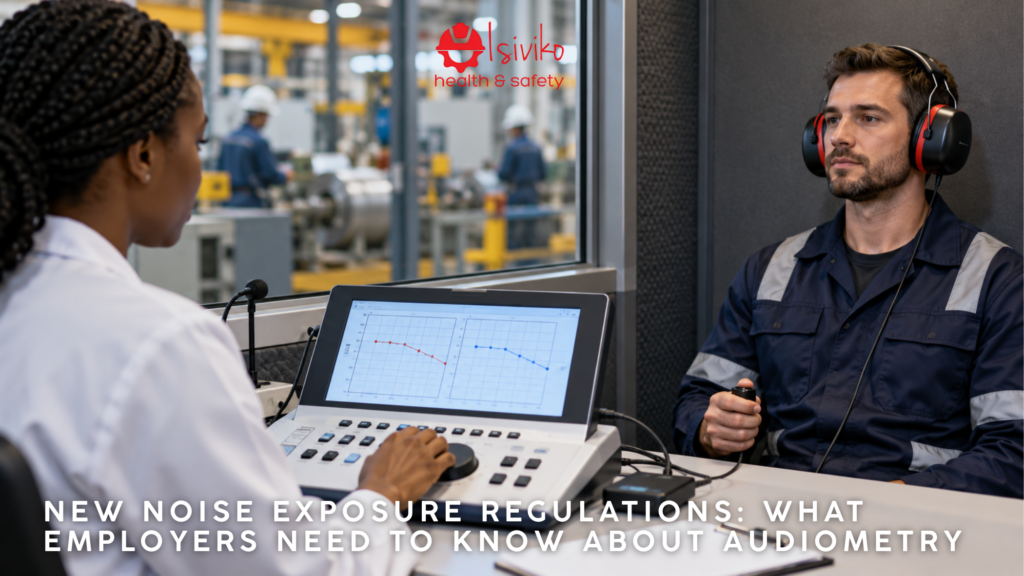
Audiometry measures hearing ability and helps identify early signs of hearing deterioration.
- 𝐌𝐄𝐃𝐈𝐂𝐀𝐋 𝐒𝐂𝐑𝐄𝐄𝐍𝐈𝐍𝐆 𝐀𝐍𝐃 𝐇𝐄𝐀𝐑𝐈𝐍𝐆 𝐒𝐔𝐑𝐕𝐄𝐈𝐋𝐋𝐀𝐍𝐂𝐄
Hearing conservation involves more than a once-off hearing test.
Employers must establish an appropriate medical surveillance programme for employees exposed to qualifying noise levels.
This includes:
Baseline or initial hearing assessments.
Regular audiometric testing.
Monitoring changes in hearing ability.
Medical follow-ups where concerning results occur.
Exit assessments where required.
Periodic testing generally takes place every 12 months for employees exposed to qualifying noise levels. Higher exposure levels require more frequent assessments, while certain testing intervals may be adjusted by an occupational medicine practitioner.
Early identification of hearing changes allows employers to investigate possible causes and improve protective measures.
- 𝐏𝐑𝐄𝐕𝐄𝐍𝐓𝐈𝐎𝐍 𝐆𝐎𝐄𝐒 𝐁𝐄𝐘𝐎𝐍𝐃 𝐇𝐄𝐀𝐑𝐈𝐍𝐆 𝐏𝐑𝐎𝐓𝐄𝐂𝐓𝐈𝐎𝐍
Providing earplugs or earmuffs is important, but hearing protection alone does not eliminate workplace noise risks.
Employers should prioritise reducing noise exposure through equipment maintenance, quieter machinery, engineering controls and safer work procedures.
Employees must also receive appropriate training on noise hazards, hearing protection and the importance of regular hearing assessments.
- 𝐄𝐌𝐏𝐋𝐎𝐘𝐄𝐑 𝐑𝐄𝐂𝐎𝐑𝐃𝐒 𝐀𝐍𝐃 𝐂𝐎𝐌𝐏𝐋𝐈𝐀𝐍𝐂𝐄
The updated regulations place greater emphasis on documented evidence of workplace noise management.
Employers must maintain accurate records of:
Noise risk assessments and monitoring results.
Employee medical screening and surveillance.
Audiometric testing.
Hearing protection and noise control measures.
Employee training and equipment maintenance.
Specified records must be retained for 40 years, with appropriate protection of confidential medical information.
Good recordkeeping supports compliance and helps employers identify potential workplace health risks over time.
𝐈𝐒 𝐘𝐎𝐔𝐑 𝐇𝐄𝐀𝐑𝐈𝐍𝐆 𝐂𝐎𝐍𝐒𝐄𝐑𝐕𝐀𝐓𝐈𝐎𝐍 𝐏𝐑𝐎𝐆𝐑𝐀𝐌𝐌𝐄 𝐂𝐎𝐌𝐏𝐋𝐈𝐀𝐍𝐓?
The September 2026 regulatory changes highlight the importance of proactive noise management and ongoing employee health surveillance.
For employers in noisy industries, reviewing existing risk assessments, hearing testing schedules and compliance records is an essential step.
Protect your employees’ hearing before permanent damage occurs.
Contact Isiviko Health & Safety for guidance on workplace noise risk assessments, occupational medical surveillance and health and safety compliance.
Phone: 023 100 1220
Email: admin@isivikohs.co.za