
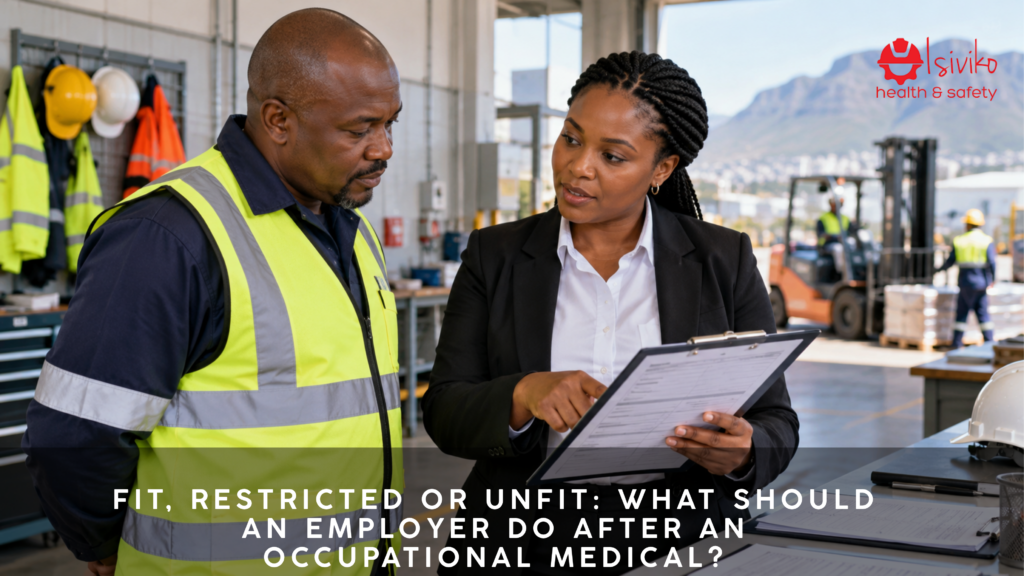
𝐓𝐡𝐞 𝐦𝐞𝐝𝐢𝐜𝐚𝐥 𝐚𝐩𝐩𝐨𝐢𝐧𝐭𝐦𝐞𝐧𝐭 𝐞𝐧𝐝𝐬. 𝐓𝐡𝐞 𝐞𝐦𝐩𝐥𝐨𝐲𝐞𝐫’𝐬 𝐫𝐞𝐬𝐩𝐨𝐧𝐬𝐢𝐛𝐢𝐥𝐢𝐭𝐲 𝐝𝐨𝐞𝐬 𝐧𝐨𝐭.
Occupational medical examinations help determine whether employees are medically suited to perform their duties safely.
But receiving a certificate of fitness is only the beginning. Employers must understand the outcome, address identified restrictions and take appropriate workplace action.
What should happen when an employee is declared fit, fit with restrictions or unfit for duty?
𝟏. 𝐅𝐢𝐭 𝐟𝐨𝐫 𝐃𝐮𝐭𝐲: 𝐖𝐡𝐚𝐭 𝐇𝐚𝐩𝐩𝐞𝐧𝐬 𝐍𝐞𝐱𝐭?
A “Fit for Duty” result indicates the employee meets the medical fitness requirements for the assessed duties.
Employers should confirm the certificate matches the employee’s actual responsibilities and workplace exposures.
Keep accurate records, monitor workplace risks and arrange follow-up assessments when required.
𝟐. 𝐅𝐢𝐭 𝐰𝐢𝐭𝐡 𝐑𝐞𝐬𝐭𝐫𝐢𝐜𝐭𝐢𝐨𝐧𝐬: 𝐖𝐡𝐚𝐭 𝐌𝐮𝐬𝐭 𝐭𝐡𝐞 𝐄𝐦𝐩𝐥𝐨𝐲𝐞𝐫 𝐃𝐨?
A “Fit with Restrictions” result does not automatically mean an employee is unable to work.
Certain duties might require adjustments to protect the employee’s health and safety.
Employers should:
Review the medical practitioner’s recommendations.
Identify tasks affected by the restrictions.
Consider reasonable adjustments or alternative duties.
Communicate relevant limitations to supervisors.
Arrange follow-up assessments when required.
Employees should not perform duties contrary to their medical restrictions without appropriate reassessment and clearance.
𝟑. 𝐔𝐧𝐟𝐢𝐭 𝐟𝐨𝐫 𝐃𝐮𝐭𝐲: 𝐖𝐡𝐚𝐭 𝐀𝐫𝐞 𝐭𝐡𝐞 𝐍𝐞𝐱𝐭 𝐒𝐭𝐞𝐩𝐬?
An “Unfit for Duty” result requires careful action.
Employers should avoid assigning employees to duties for which they have been declared medically unfit.
Consult the appropriate occupational health practitioner, assess potential workplace adjustments and consider suitable alternative duties where appropriate.
An unfit result does not automatically justify dismissal. Employers must follow applicable employment legislation and fair incapacity procedures.
𝟒. 𝐊𝐞𝐞𝐩 𝐀𝐜𝐜𝐮𝐫𝐚𝐭𝐞 𝐎𝐜𝐜𝐮𝐩𝐚𝐭𝐢𝐨𝐧𝐚𝐥 𝐇𝐞𝐚𝐥𝐭𝐡 𝐑𝐞𝐜𝐨𝐫𝐝𝐬
Medical certificates should form part of a structured workplace health and safety process.
Employers should maintain records of fitness outcomes, restrictions, workplace adjustments and follow-up assessments.
Good recordkeeping supports compliance and helps demonstrate responsible workplace management.
𝟓. 𝐏𝐫𝐨𝐭𝐞𝐜𝐭 𝐄𝐦𝐩𝐥𝐨𝐲𝐞𝐞 𝐌𝐞𝐝𝐢𝐜𝐚𝐥 𝐂𝐨𝐧𝐟𝐢𝐝𝐞𝐧𝐭𝐢𝐚𝐥𝐢𝐭𝐲
Employers need to understand an employee’s fitness for work, but they do not automatically need access to confidential medical diagnoses.
Share relevant fitness recommendations and work restrictions only with authorised personnel who need the information to manage workplace safety.
Medical information must be handled securely and in line with applicable privacy requirements.
𝐓𝐮𝐫𝐧 𝐌𝐞𝐝𝐢𝐜𝐚𝐥 𝐑𝐞𝐬𝐮𝐥𝐭𝐬 𝐢𝐧𝐭𝐨 𝐖𝐨𝐫𝐤𝐩𝐥𝐚𝐜𝐞 𝐀𝐜𝐭𝐢𝐨𝐧
An occupational medical should lead to informed workplace decisions, not simply another certificate on file.
Whether an employee is fit, restricted or unfit, employers must understand the findings and respond appropriately.
𝐇𝐨𝐰 𝐈𝐬𝐢𝐯𝐢𝐤𝐨 𝐇𝐞𝐚𝐥𝐭𝐡 & 𝐒𝐚𝐟𝐞𝐭𝐲 𝐂𝐚𝐧 𝐇𝐞𝐥𝐩
At Isiviko Health & Safety, we support businesses with occupational medicals, workplace risk assessments and health and safety compliance.
𝐀𝐫𝐞 𝐲𝐨𝐮𝐫 𝐨𝐜𝐜𝐮𝐩𝐚𝐭𝐢𝐨𝐧𝐚𝐥 𝐦𝐞𝐝𝐢𝐜𝐚𝐥 𝐜𝐞𝐫𝐭𝐢𝐟𝐢𝐜𝐚𝐭𝐞𝐬 𝐥𝐞𝐚𝐝𝐢𝐧𝐠 𝐭𝐨 𝐭𝐡𝐞 𝐫𝐢𝐠𝐡𝐭 𝐰𝐨𝐫𝐤𝐩𝐥𝐚𝐜𝐞 𝐝𝐞𝐜𝐢𝐬𝐢𝐨𝐧𝐬?
Speak to Isiviko Health & Safety about reviewing your occupational medical requirements and strengthening your workplace safety procedures.
𝐂𝐨𝐧𝐭𝐚𝐜𝐭 𝐈𝐬𝐢𝐯𝐢𝐤𝐨 𝐇𝐞𝐚𝐥𝐭𝐡 & 𝐒𝐚𝐟𝐞𝐭𝐲